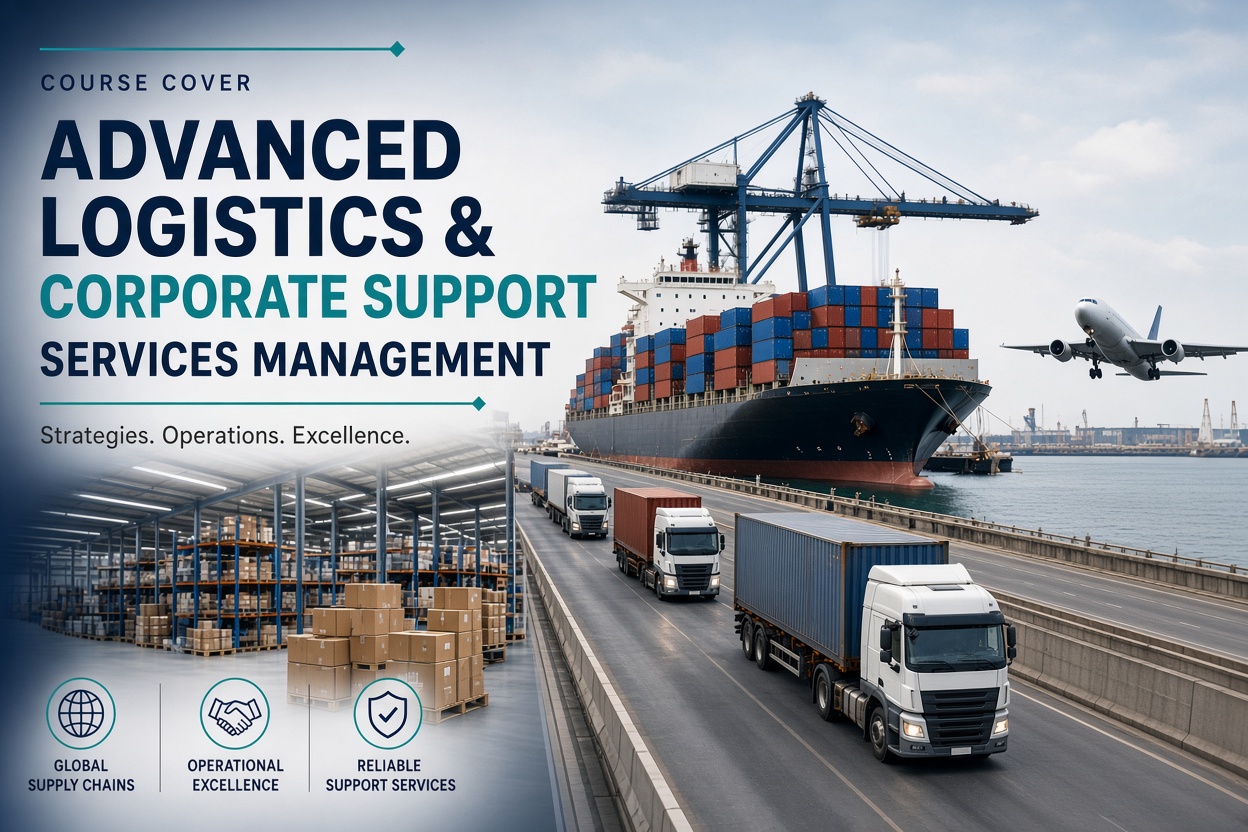

Advanced Logistics & Corporate Support Services Management
Course Description
This advanced five-day training course is designed for supervisors and professionals responsible for managing logistics operations and corporate support services. It provides a practical and structured approach to planning, coordinating, supervising, and continuously improving a wide range of logistics and support activities. The course covers key areas including logistics and operational planning, transportation and travel coordination, vendor and service provider management, cost control, risk and contingency planning, stakeholder coordination, service performance, KPIs, and corporate hospitality and support services. Participants will develop the supervisory skills required to ensure reliable, cost-effective, and high-quality logistics support while effectively coordinating with internal departments, external service providers, and other stakeholders.
The Training Course Will Highlight ?

Expected Outcomes

Upon completion of the course, participants will have a structured framework for managing logistics and corporate support services, improving operational coordination, controlling costs, managing vendors and stakeholders, monitoring service performance, and ensuring reliable delivery of day-to-day logistics services.

Training Objective

By the end of this course, participants will be able to:

  • Develop and implement effective logistics and operational plans.
  • Coordinate transportation, travel, accommodation, and related employee support services.
  • Supervise day-to-day logistics and corporate support activities efficiently.
  • Manage external vendors, contractors, and service providers effectively.
  • Establish effective service standards and monitor supplier performance.
  • Apply cost-control techniques to logistics and support services.
  • Identify operational risks and develop contingency and business continuity measures.
  • Manage competing priorities and resolve day-to-day operational challenges.
  • Strengthen coordination and communication with internal departments and external stakeholders.
  • Develop and monitor meaningful logistics and service-performance KPIs.
  • Improve the quality, efficiency, and reliability of corporate support services.
  • Apply professional approaches to corporate events, official visits, hospitality, and employee support activities.
  • Identify opportunities for process improvement and service optimization.

Target Audience

This course is designed for:

  • Logistics Supervisors and Senior Logistics Coordinators
  • Logistics and Supply Chain Professionals
  • Administration and Corporate Services Supervisors
  • Facilities and Support Services Supervisors
  • Transportation and Travel Coordinators
  • Corporate Services and Office Services Professionals
  • Hospitality and Events Support Professionals
  • Professionals responsible for vendor and service-provider coordination
  • Supervisors responsible for employee logistical support
  • Professionals seeking to advance their supervisory and operational logistics skills

Training Methods

Daily Agenda

DAY 1 – Advanced Logistics Management & Operational Planning

  1. Modern Logistics Management
  • The role and scope of logistics management
  • Logistics within corporate support operations
  • Key responsibilities of a Logistics Supervisor
  • Integrating logistics with organizational objectives
  • Managing service quality, reliability, and responsiveness
  1. Logistics Planning & Operational Coordination
  • Developing effective logistics plans
  • Daily, weekly, and long-term operational planning
  • Resource planning and allocation
  • Managing priorities and operational workloads
  • Coordinating multiple logistics activities simultaneously
  • Managing urgent requests and changing priorities
  1. Logistics Processes & Service Workflows
  • Mapping logistics processes
  • Identifying bottlenecks and service gaps
  • Standardizing recurring logistics activities
  • Improving coordination between departments
  • Process improvement and service optimization


DAY 2 – Transportation, Travel & Corporate Support Services

  1. Transportation Coordination
  • Employee transportation planning and coordination
  • Fleet and transportation service management
  • Route planning and scheduling
  • Transportation service providers
  • Managing transportation disruptions and delays
  • Safety, reliability, and service continuity
  1. Travel & Accommodation Coordination
  • Corporate travel planning
  • Employee travel arrangements
  • Accommodation coordination
  • Travel-related vendors and service providers
  • Managing last-minute changes and emergencies
  • Controlling travel-related costs
  1. Corporate Events & Official Visits
  • Planning and coordinating corporate events
  • Official visits and executive support
  • Guest transportation and accommodation
  • Catering and hospitality coordination
  • Coordination with internal departments and external providers
  • Event logistics checklists and contingency planning


DAY 3 – Vendor Management, Cost Control & Service Quality

  1. Vendor & Service Provider Management
  • Identifying and evaluating service providers
  • Defining service requirements and expectations
  • Vendor coordination and communication
  • Service Level Agreements (SLAs)
  • Monitoring vendor compliance and performance
  • Managing service issues and corrective actions
  • Building effective supplier relationships
  1. Logistics Cost Management
  • Understanding logistics and support-service cost drivers
  • Budget planning and cost forecasting
  • Cost monitoring and expenditure control
  • Identifying cost-saving opportunities
  • Managing service quality while controlling costs
  • Evaluating vendor quotations and service proposals
  1. Service Quality Management
  • Defining service standards
  • Monitoring service delivery
  • Handling complaints and service failures
  • Corrective and preventive actions
  • Continuous improvement of support services


DAY 4 – Risk, Contingency Planning & Stakeholder Management

  1. Logistics Risk Management
  • Identifying operational and logistical risks
  • Risk assessment and prioritization
  • Transportation and supplier-related risks
  • Service interruption risks
  • Emergency logistics considerations
  1. Contingency & Business Continuity Planning
  • Developing contingency plans for critical services
  • Alternative transportation and supplier arrangements
  • Managing unexpected operational disruptions
  • Emergency communication and escalation procedures
  • Maintaining continuity of essential support services
  1. Stakeholder Management
  • Identifying key internal and external stakeholders
  • Effective coordination with HR, Administration, Finance, Procurement, HSE, and other departments
  • Managing expectations and service requirements
  • Professional communication with vendors and service providers
  • Handling conflicts and operational challenges
  • Escalation and decision-making techniques


DAY 5 – KPIs, Performance Management & Supervisory Excellence

  1. Logistics & Corporate Support KPIs
  • Developing effective logistics KPIs
  • Service quality and responsiveness indicators
  • Transportation performance indicators
  • Vendor performance indicators
  • Cost and efficiency indicators
  • Employee satisfaction and service feedback
  • SLA performance monitoring
  1. Performance Monitoring & Reporting
  • Building logistics performance dashboards
  • Monitoring trends and service gaps
  • Preparing management reports
  • Using data to support operational decisions
  • Conducting performance reviews with service providers
  1. Supervisory Excellence in Logistics
  • Effective supervision and delegation
  • Managing logistics teams and workloads
  • Problem-solving and operational decision-making
  • Managing pressure and competing priorities
  • Improving communication and coordination
  • Developing accountability and service ownership
  1. Integrated Logistics Improvement Plan
  • Reviewing current logistics and support processes
  • Identifying improvement opportunities
  • Developing an action plan
  • Setting priorities, responsibilities, and timelines
  • Establishing measurable performance targets
Accreditation

CDGA attendance certificate will be issued to all attendees completing minimum of 75% of the total course duration.

Quick Enquiry

Request Info

Download Brochure Request In house Proposal

Course Rounds : (5 -Days)


Code Date Venue Fees Register
LOG142-01 29-03-2027 Zürich USD 6950
LOG142-02 28-06-2027 Kuala-Lumpur USD 5950
LOG142-03 27-09-2027 London USD 6950
LOG142-04 19-12-2027 Cairo USD 5450
Prices doesn't include VAT

UpComing Date


Details
  • Start date 29-03-2027
  • End date 02-04-2027

Venue
  • Country Switzerland
  • Venue Zürich

Quality Policy

 Providing services with a high quality that are satisfying the requirements
 Appling the specifications and legalizations to ensure the quality of service.
 Best utilization of resources for continually improving the business activities.

Technical Team

CDGA keen to selects highly technical instructors based on professional field experience

Strengths and capabilities

Since CDGA was established, it considered a training partner for world class oil & gas institution

Search For Available Course

Ireland, Ireland

3012, Block 3, 30 Euro Business Park, Little Island, Co. Cork, T45 V220, Ireland

+353 214 552955

Mon to Fri 09:00 AM to 06:00 PM

Info@cdga-training.com

Contact Us anytime!