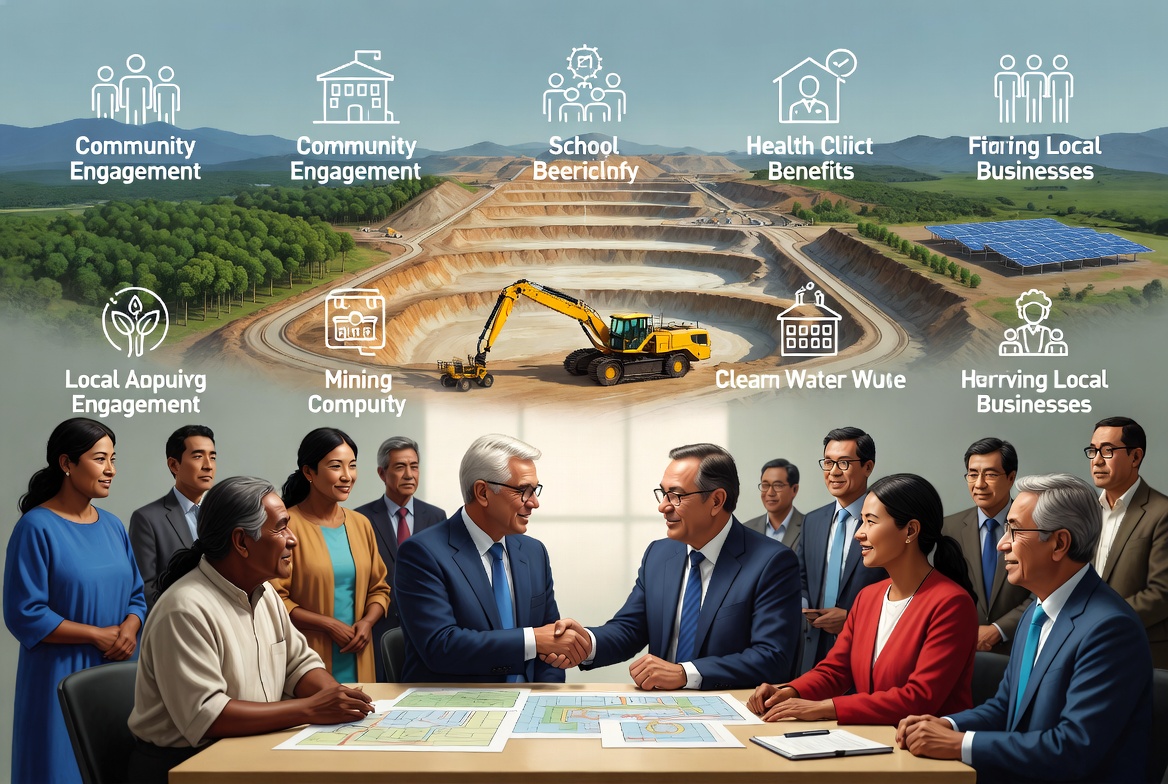

Community Relations, Stakeholder Engagement and Social Performance in the Mining Sector
Course Description
In today's mining environment, maintaining a social license to operate is a critical success factor for business continuity and sustainable growth. Mining companies must adopt strategic and integrated approaches to community relations and social performance management to proactively address social risks and stakeholder expectations. Effective engagement with key stakeholders, including government authorities, traditional leaders, employees, contractors, community representatives, and other interested parties is fundamental to building trust, managing risks, and creating mutually beneficial outcomes. Strong stakeholder relationships not only support operational stability but also contribute to enhanced business performance and long-term sustainability. This intensive online training programme provides participants with the knowledge, skills, and practical methodologies required to effectively manage stakeholder relationships and social performance in the mining industry. The course focuses on strengthening participants' ability to identify and mitigate social risks, manage community expectations, address stakeholder concerns, and implement sustainable community development programmes that support both business objectives and societal value creation. Participants will explore contemporary approaches to stakeholder engagement, including digital engagement platforms, grievance management systems, ESG communication, crisis communication, and trust-building strategies. The programme combines leading practices, practical tools, and real-world case studies to ensure participants can apply the concepts directly within their operating environments. By the end of the programme, participants will have gained practical expertise in stakeholder engagement planning, social impact management, community investment, grievance resolution, social performance reporting, and risk management, enabling them to contribute effectively to maintaining a strong social licence to operate and supporting the long-term sustainability of mining operations
The Training Course Will Highlight ?
Training Objective

By the end of this training course, participants should be able to:

  • Explain the principles and strategic importance of Community Relations and Social Performance within mining operations.
  • Identify, analyse, prioritise, and map stakeholders using recognized stakeholder engagement methodologies.
  • Develop effective stakeholder engagement and community consultation plans.
  • Strengthen Social License to Operate through trust-building and meaningful engagement initiatives.
  • Design and implement effective grievance management and community feedback mechanisms.
  • Identify, assess, and mitigate social risks that may impact mining operations and stakeholder relationships.
  • Understand Social Impact Assessment (SIA) processes and develop Social Impact Management Plans (SIMPs).
  • Develop sustainable community development and community investment strategies aligned to stakeholder needs.
  • Navigate regulatory requirements and governance expectations related to stakeholder engagement and social performance.
  • Effectively manage community concerns relating to environmental impacts, water, land use, employment, procurement, and livelihoods.
  • Build constructive relationships with government stakeholders, traditional authorities, community representatives, and local institutions.
  • Apply crisis and incident communication principles during operational disruptions and community-related incidents.
  • Monitor, measure, evaluate, and report social performance outcomes using meaningful indicators and KPIs.
  • Develop and implement digital communication strategies that support stakeholder engagement and community trust.
  • Communicate ESG, sustainability, social performance, and community-investment outcomes effectively to internal and external stakeholders.

Target Audience

This programme is designed for professionals responsible for Community Relations, Stakeholder Engagement, Sustainability, Social Performance, and Community Development within the mining industry, including:

  • Community Relations Practitioners
  • Social Performance Specialists
  • Community Development Officers
  • Stakeholder Engagement Practitioners
  • ESG and Sustainability Professionals
  • Corporate Affairs Practitioners
  • Government Relations Officers
  • Environmental and Social Management Professionals
  • Mine Managers and Operational Leaders
  • Human Capital and Labour Relations Professionals
  • Project Managers
  • Compliance and Risk Management Personnel
  • Contractors and consultants supporting mining community initiatives

Training Methods

The programme will be delivered through a highly interactive online learning approach that combines theory, practical application, and mining-specific case studies.
Training methodologies include:

  • Facilitator-led virtual learning sessions.
  • Interactive discussions and peer learning.
  • Practical exercises and stakeholder engagement simulations.
  • Mining industry case studies and lessons learned.
  • Group activities and problem-solving workshops.
  • Social risk assessment exercises.
  • Community engagement and grievance management scenarios.
  • Digital communication planning exercises.
  • Knowledge assessments and reflection activities.
  • Templates, tools, and resource materials for workplace application

Daily Agenda

Module One:

Foundations of Community Relations, Stakeholder Engagement and Social Performance

Topics Covered:

  • Introduction to Community Relations and Social Performance
  • Social License to Operate (SLO) fundamentals
  • Stakeholder engagement principles and leading practices
  • Social performance governance frameworks
  • The business value of strong community relationships
  • Roles and responsibilities of Community Relations practitioners

Module Two:

Stakeholder Identification, Mapping and Engagement Planning

Topics Covered:

  • Stakeholder identification methodologies
  • Stakeholder analysis and prioritisation
  • Influence and interest mapping
  • Stakeholder engagement planning
  • Community consultation approaches
  • Government and traditional leadership engagement
  • Building community trust and maintaining stakeholder relationships

Practical Exercise: Development of a stakeholder map and stakeholder engagement plan.


Module Three:

Social Risk Management, Social Impact Assessment and Grievance Management

Topics Covered:

  • Social risk identification and assessment
  • Community unrest and conflict risk management
  • Social Impact Assessment (SIA) fundamentals
  • Social Impact Management Plans (SIMPs)
  • Designing effective grievance mechanisms
  • Complaint handling and dispute resolution
  • Community feedback systems and stakeholder responsiveness

Practical Exercise: Social risk assessment and grievance management simulation.


Module Four:
Community Development, Community Investment and Managing Community Concerns

Topics Covered:

  • Community development planning
  • Community needs assessment
  • Sustainable livelihood initiatives
  • Community investment strategies
  • Managing community concerns related to:
    • Environmental impacts
    • Water use and access
    • Land use issues
    • Employment and procurement expectations
    • Livelihood impacts
  • Measuring community development outcomes

Practical Exercise: Development of a community development and investment framework.


Module Five:
Digital Communication, Crisis Communication and Social Performance Reporting

Topics Covered:

  • Community communication strategies
  • Supporting stakeholder engagement through digital channels
  • Communicating ESG, sustainability, and social performance outcomes
  • Developing community-focused content and success stories
  • Managing rumours, misinformation, complaints, and concerns
  • Digital grievance communication and feedback mechanisms
  • Crisis and incident communication in mining environments
  • Social performance monitoring, KPIs, and reporting
  • Measuring stakeholder outreach and communication effectiveness

Practical Exercise: Development of a stakeholder communication and social performance reporting plan.

Accreditation
Quick Enquiry

Request Info

Download Brochure Request In house Proposal

Course Rounds : (5 -Days)


Code Date Venue Fees Register
HR187-02 20-09-2026 Online USD 2750
HR187-01 23-11-2026 Istanbul USD 5950
HR187-03 13-12-2026 Dubai USD 5450
Prices doesn't include VAT

UpComing Date


Details
  • Start date 20-09-2026
  • End date 24-09-2026

Venue
  • Country Online
  • Venue Online

Quality Policy

 Providing services with a high quality that are satisfying the requirements
 Appling the specifications and legalizations to ensure the quality of service.
 Best utilization of resources for continually improving the business activities.

Technical Team

CDGA keen to selects highly technical instructors based on professional field experience

Strengths and capabilities

Since CDGA was established, it considered a training partner for world class oil & gas institution

Search For Available Course

Ireland, Ireland

3012, Block 3, 30 Euro Business Park, Little Island, Co. Cork, T45 V220, Ireland

+353 214 552955

Mon to Fri 09:00 AM to 06:00 PM

Info@cdga-training.com

Contact Us anytime!