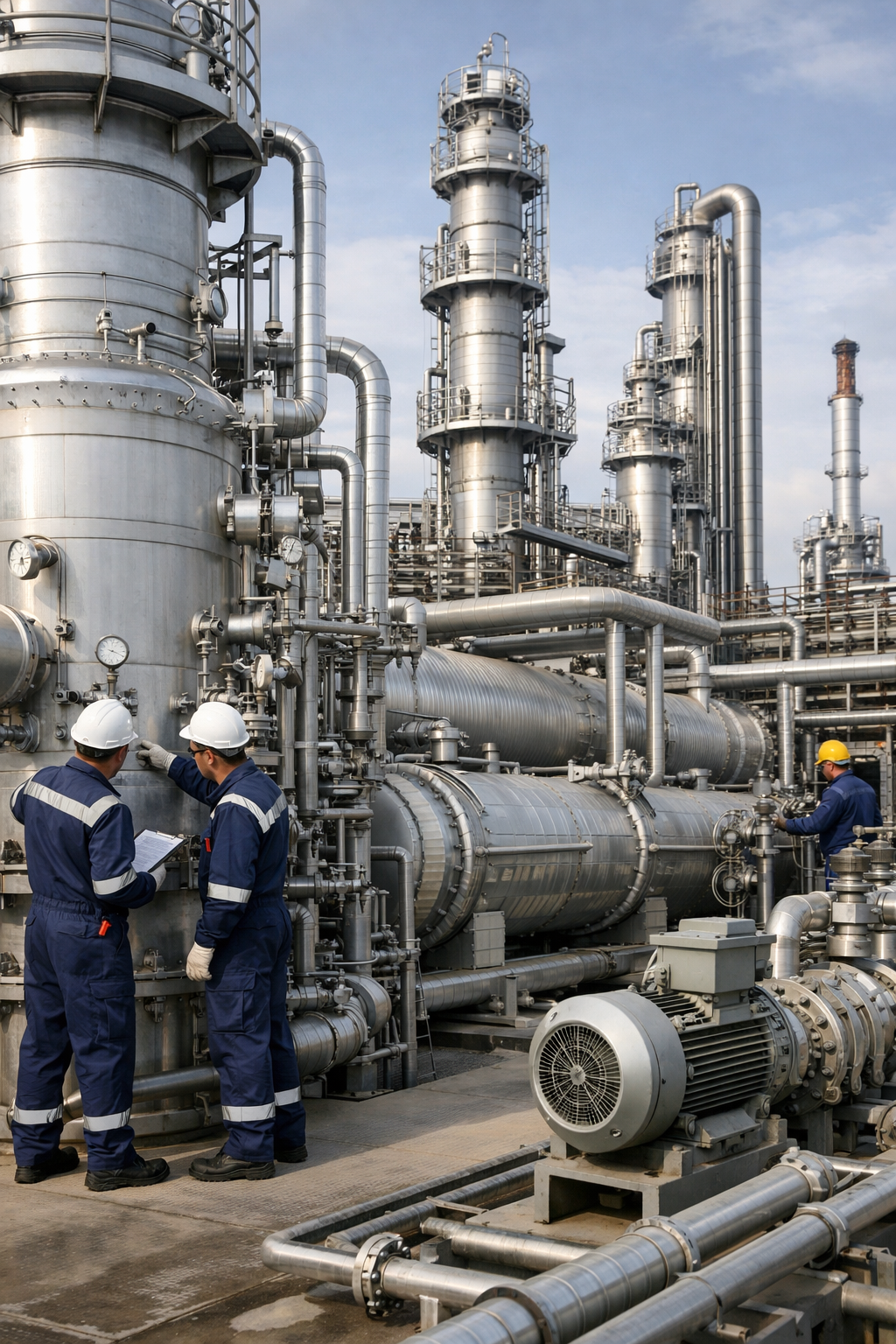

This training course will feature:
• Lectures, exercises and team work in some areas of process design and improvement
• Real studies that exhibit improvement solution for energy/environment
• Knowledge transfer of instructor’s extensive engaged industrial consultations
• Practice of Excel-based design tools for mass/energy integration in refining plants
• Open discussion on actual problems/data for design and improvements
By the end of this training course, participants will be able to:
• Develop deep understanding of mass/H2/energy balance in refining processes
• Gain in-depth knowledge of the state-of-the-art of material and energy integration
• Evaluate different flow schemes for hydrotreating and hydrocracking processes
• Manipulated process design and operation variables for better H2-conversion performances
• Master experiences of chemistry/kinetics, function of catalysts, clean production, environmental issues of very
typical upgraded fuel productions
Who is this Training Course for?
The course is of great significance to process/operational engineers, technicians, control engineers, designers, scientists
and researchers working closely in the refining industry in general or particularly Hydrocracking, Hydrotreating processes. It
is also substantially beneficial to other professionals and experts who have considerable experiences in other fields of
business and keen to gain a sufficient knowledge in the particular industry of Hydro-conversion. All levels of professionalism
are eligible for the course, ranging from young-fresh personnel to highly experienced ones.
This training course is suitable to a wide range of professionals but will greatly benefit:
• Process and development engineers
• Plant managers
• Operational engineers/control personnel
• Researchers/scientists
• Project and design engineers
How will this Training Course be Presented?
This training course will utilise a variety of proven adult learning techniques to ensure maximum understanding,
comprehension and retention of the information presented. This includes course materials, proposed reading/state-of-the
art of the course content, lecture talks, exercises, team works and discussions, and solved applications. The nature of the
course will be interactive and a practice of how to think, not what to think will be mastered. The philosophy of the course
delivery will be:
• Development of a deep understanding of the-state-of-the-art of all contents and topics
• Analysis and improvement of some case studies with respect to economics and environment
• Practices in process design/simulation of specific applications based on Excel or commercial packages if available
Day One: Introduction: The Basics
• Fundamentals of Mass/Hydrogen and Energy Balance in Refineries
• State-of-the-Art of Material and Energy Integration
• Fundamentals of Petroleum Refinery Processing: Downstream Crude Oil Refining
• Products’ Specifications and Characteristics
• Process Design/Optimisation and Heat Integration Schemes
• Environmental and Economic Issues
Day Two: HydroTreating – Fundamentals and Principles
• Introduction to Hydro-Conversion Processes and H2 Sources
• Process Flow Schemes
• Process Chemistry and Kinetics
• Catalysts/ Heat of Reactions
• Operating Conditions, Principles and Design Considerations
• Hydrogen Requirements for Hydrotreating
Day Three: HydroTreating – Advanced Processing
• Reactors Design
• Applications to Naphtha, Middle Distillate, Gas Oil and
• Atmospheric Residue Desulphurisation
• Saturation of Benzene in Gasoline
• Potential Improvements for Material and Energy Savings
• Clean Diesel Hydrotreating Process Technology – Critical Issues
Day Four: Hydrocracking – Fundamentals and Principles
• Feed Stocks and Products
• Process Chemistry/Kinetics
• Catalysts/De-activation and Re-Generation
• Products Quality and Yields: Process Configuration, Catalyst Type and Operating Process Variables and Parameters
• Reactors Technology for Hydrocracking
• Single Stage Hydrocracking Process Technology
Day Five: Hydrocracking – Advanced Processing
• Two Stage Hydrocracking Process Technology
• Process Design Features
• Hydrogen Balance and Consumption
• Scope for Process Integration Improvements
• Hydrogen Balance/Integration and Management
• Steam/Methane Reforming
A CDGA attendance certificate will be issued to all attendees completing a minimum of 75% of the total course duration.
| Code | Date | Venue | Fees | Register |
|---|---|---|---|---|
| PE236-05 | 01-11-2026 | Manama | USD 5450 | |
| PE236-01 | 15-03-2027 | Kuala-Lumpur | USD 5950 | |
| PE236-02 | 06-06-2027 | Cairo | USD 5450 | |
| PE236-03 | 30-08-2027 | Amsterdam | USD 6950 | |
| PE236-04 | 28-11-2027 | Dubai | USD 5450 |
Providing services with a high quality that are satisfying the requirements
Appling the specifications and legalizations to ensure the quality of service.
Best utilization of resources for continually improving the business activities.
CDGA keen to selects highly technical instructors based on professional field experience
Since CDGA was established, it considered a training partner for world class oil & gas institution
3012, Block 3, 30 Euro Business Park, Little Island, Co. Cork, T45 V220, Ireland
Mon to Fri 09:00 AM to 06:00 PM
Contact Us anytime!
Request Info