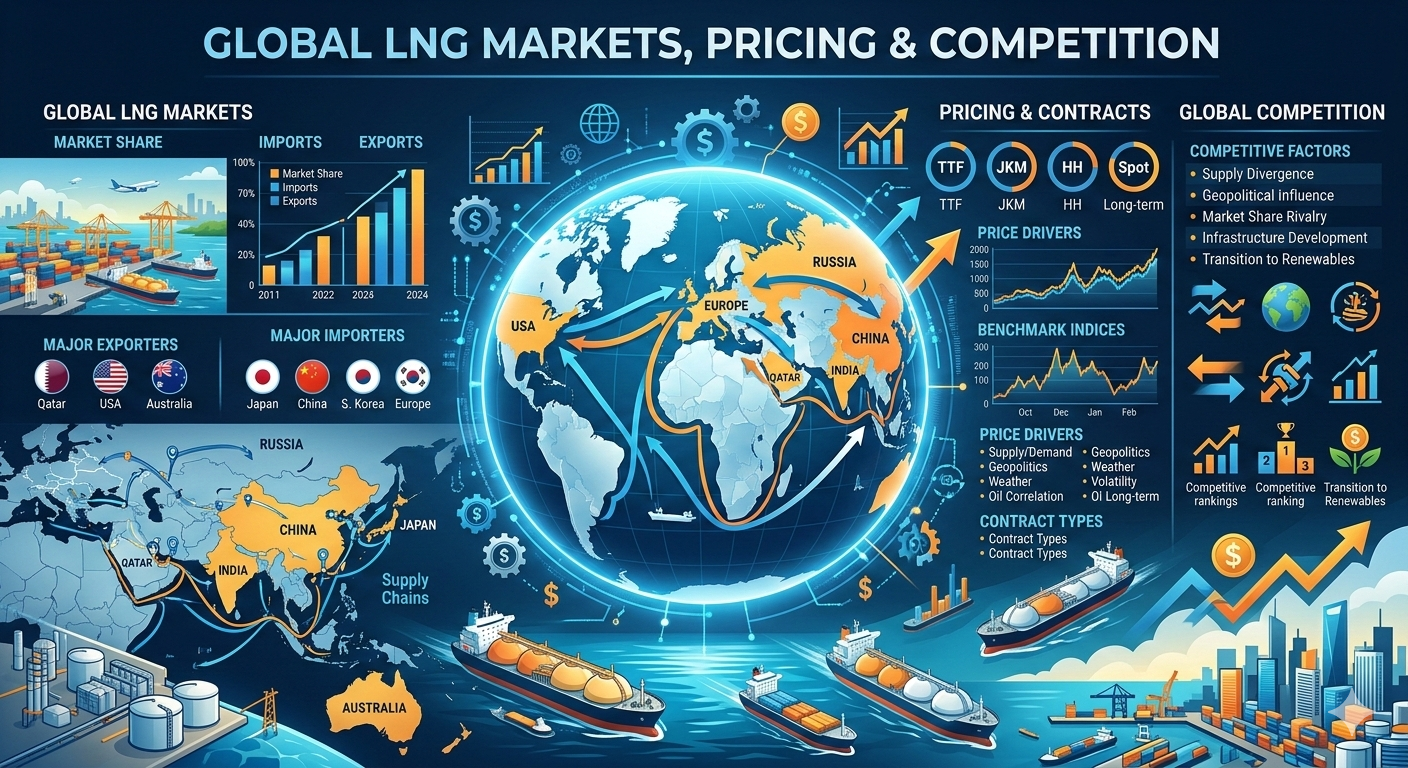

Global LNG Markets, Pricing and Competition
Course Description
Environmental pressure and the race to mitigate the effects of climate change have propelled the use of natural gas to the forefront of the available options for reducing our dependence on fossil fuels. Natural gas although a fossil fuel itself, actually reduces the worlds carbon footprint and is considered as an intermediate step until renewable sources of energy become competitive. LNG Markets, Pricing and Hedging examines the dynamics of the LNG market which is currently undergoing changes with more and more spot and short term trading, new players in the form of trading houses, new price benchmarks being introduced and new financial instruments like futures and swaps become available for managing price risks. Presently the oversupplied LNG market is, a result of rising supply from relatively new exporting facilities mainly from the U.S. and Australia. The rising demand in Asia, has failed to keep up with the rising supply and LNG prices have sunk. The result is that the main buyers from leading importing countries are moving away from a single supplier on long term oil indexed contracts, to a much more flexible procurement portfolio with short term and spot contracts. For a futures contract the main requirements are a well-functioning underling cash market and enough potential buyers and sellers to create enough liquidity therefore the Brent and Henry Hub Natural gas futures being highly liquid could therefore be used as a solid hedging instruments
The Training Course Will Highlight ?

This training course will highlight:

  • LNG Market fundamentals analysis
  • LNG Pricing methods
  • LNG projects' economic evaluation
  • LNG supply, trading & hedging strategies
  • Natural gas and LNG markets
  • Understand regional LNG pricing effects
  • Learn what LNG derivatives are and how these are used for hedging and trading purposes
Training Objective

  • This training course will highlight:
  • LNG Market fundamentals analysis
  • LNG Pricing methods
  • LNG projects' economic evaluation
  • LNG supply, trading & hedging strategies
  • Natural gas and LNG markets
  • Understand regional LNG pricing effects
  • Learn what LNG derivatives are and how these are used for hedging and trading purposes

Target Audience

  • This training course will highlight:
  • LNG Market fundamentals analysis
  • LNG Pricing methods
  • LNG projects' economic evaluation
  • LNG supply, trading & hedging strategies
  • Natural gas and LNG markets
  • Understand regional LNG pricing effects
  • Learn what LNG derivatives are and how these are used for hedging and trading purposes

Training Methods

This interactive Training will be highly interactive, with opportunities
 to advance your opinions and ideas and will include:

  • Lectures
  • Workshop & Work Presentation
  • Case Studies and Practical Exercise
  • Videos and General Discussions

Daily Agenda

Day One: LNG Markets

  • Chemistry of oil and gas
  • Characteristics of natural gas
  • Liquefaction & Regasification Plant Technology
  • Sales gas and product specifications
  • LNG Quality (GCV, Impurities, etc.)
  • Natural Gas Value Chain
  • LNG Imports / exports Outlook by Region

Day Two: Environment

  • Promotion of natural gas to meet future world energy demands
  • Energy strategy and natural gas
  • Natural gas market developments
  • Essential Logistics of LNG
  • Natural gas role in the international energy industry and security of supply and demand
  • Environmental regulations boost the competitiveness of gas in the electric power mix
  • Natural gas v’s coal and oil on the impact of greenhouse gas emissions and climate change

 Day Three: LNG Sales and Marketing

  • LNG and global sustainable development
  • LNG Sales and Marketing
  • LNG Project Financing and Project Management
  • LNG Agreements
  • LNG Market Fundamentals
  • LNG Projects' Economics
  • China and India are leading the way globally in LNG demand growth 

Day Four: LNG Future

  • The Future Trends in Natural Gas
  • LNG’s role in the international gas trade
  • The Role of U.S. Natural Gas in the Global Marketplace
  • The Competitive Landscape for LNG
  • Reasons to develop an LNG trading market
  • LNG’ s suitability for trading
  • Growth of spot trading

Day Five: LNG Pricing

  • Price transparency
  • LNG Supply, Trading & Hedging Strategies
  • LNG derivatives – Futures, Options and Swaps
  • Henry Hub Natural Gas Spot Prices
  • Price Slopes, Maximum Available Netback Prices, Proxy Curves, etc.
  • Can U.S. LNG exports to central Europe compete with Russian piped gas in terms of price?
Accreditation

CDGA attendance certificate will be issued to all attendees completing minimum of 80% of the total course duration.

Quick Enquiry

Request Info

Download Brochure Request In house Proposal

Course Rounds : (5 -Days)


Code Date Venue Fees Register
PM248-01 26-04-2026 Cairo USD 5450
PM248-02 03-08-2026 Rome USD 6950
PM248-03 26-10-2026 Barcelona USD 6950
Prices doesn't include VAT

UpComing Date


Details
  • Start date 26-04-2026
  • End date 30-04-2026

Venue
  • Country Egypt
  • Venue Cairo

Quality Policy

 Providing services with a high quality that are satisfying the requirements
 Appling the specifications and legalizations to ensure the quality of service.
 Best utilization of resources for continually improving the business activities.

Technical Team

CDGA keen to selects highly technical instructors based on professional field experience

Strengths and capabilities

Since CDGA was established, it considered a training partner for world class oil & gas institution

Search For Available Course

Ireland, Ireland

3012, Block 3, 30 Euro Business Park, Little Island, Co. Cork, T45 V220, Ireland

+353 214 552955

Mon to Fri 09:00 AM to 06:00 PM

Info@cdga-training.com

Contact Us anytime!